How to Ship an Ultrasound Machine Safely
Ultrasound systems look rugged, but their probes, screens and electronics are easy to damage. Here is how to ship one the right way.
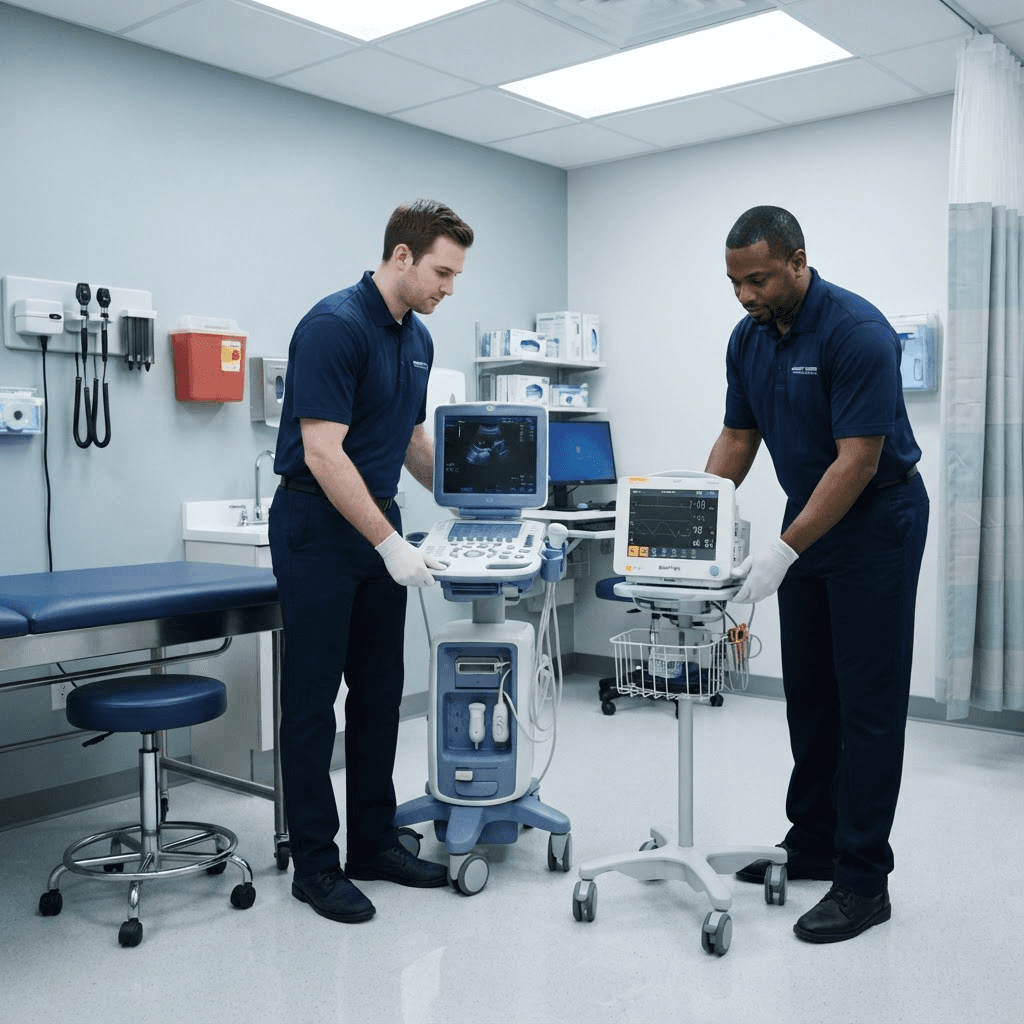
Ultrasound machines are some of the most commonly moved pieces of medical equipment. Clinics upgrade, practices relocate, and refurbished units are bought and sold every day. They roll on casters and look sturdy, but inside are sensitive electronics, a fragile display and transducers that can cost thousands of dollars each to replace. Here is how to ship an ultrasound machine so it arrives ready to use.
Before you ship: prepare the system
Save or remove patient data according to your facility’s policy before the unit leaves the building. Power the system down using the normal shutdown process, not the power switch alone. Disconnect all transducers and accessories, label each one, and pack them separately. Lock the casters, lower and secure the monitor arm and control panel, and note any existing scratches or damage with photos.
Protect the transducers
Transducers (probes) are the most fragile and expensive part of most systems. Never ship them hanging from the machine. Each probe should be wrapped, cushioned and packed in its own case or padded box, with cables coiled loosely and never kinked. Mark the box "Fragile - Do Not Stack."
Packing the main unit
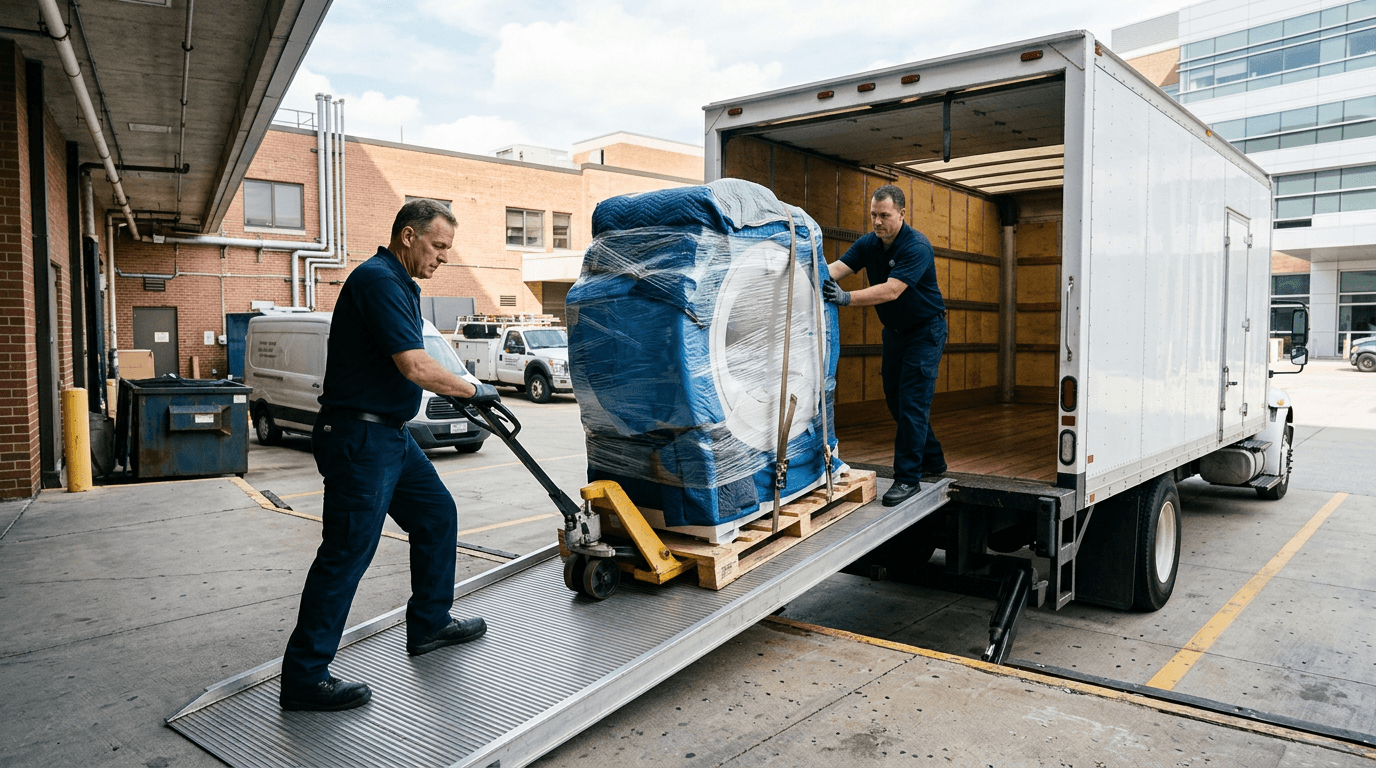
A short local move can often be done blanket wrapped with the unit strapped upright on a padded cart. For longer trips, a custom crate or a pallet with foam bracing keeps the cart from rolling and protects the screen. The unit should travel upright and never be laid on its side.
Why the type of carrier matters
On a standard LTL freight truck, a machine may be loaded, unloaded and moved through several terminals before delivery, and every extra handling is another chance for damage. A dedicated hot shot or white-glove carrier picks the unit up and delivers it directly, with the same team responsible from start to finish.
At delivery
Ask for inside delivery to the exam room, not just the dock. Let the unit sit at room temperature before powering it up, especially after cold or hot weather. Check the system against your photos, then reconnect the transducers and run your normal startup checks or have your service provider verify it.
Checklist
- Patient data handled per policy.
- System shut down properly.
- Transducers labeled and packed separately.
- Casters locked and arms secured.
- Photos taken before pickup.
- Inside delivery and placement requested.
Need an ultrasound machine moved?
RapidMed Logistics moves ultrasound systems, imaging equipment and other medical devices nationwide with hot shot and white-glove service, 24/7. Call 866-216-7742 or request a quote at https://www.medicalequipmentlogistics.net/quote.
See more jobs like this on our Facebook page (opens in a new tab)
Need this handled by professionals?
RapidMed Logistics provides 24/7 hot shot, white-glove medical equipment transport with same-day and next-day service. Talk to dispatch or request a quote.