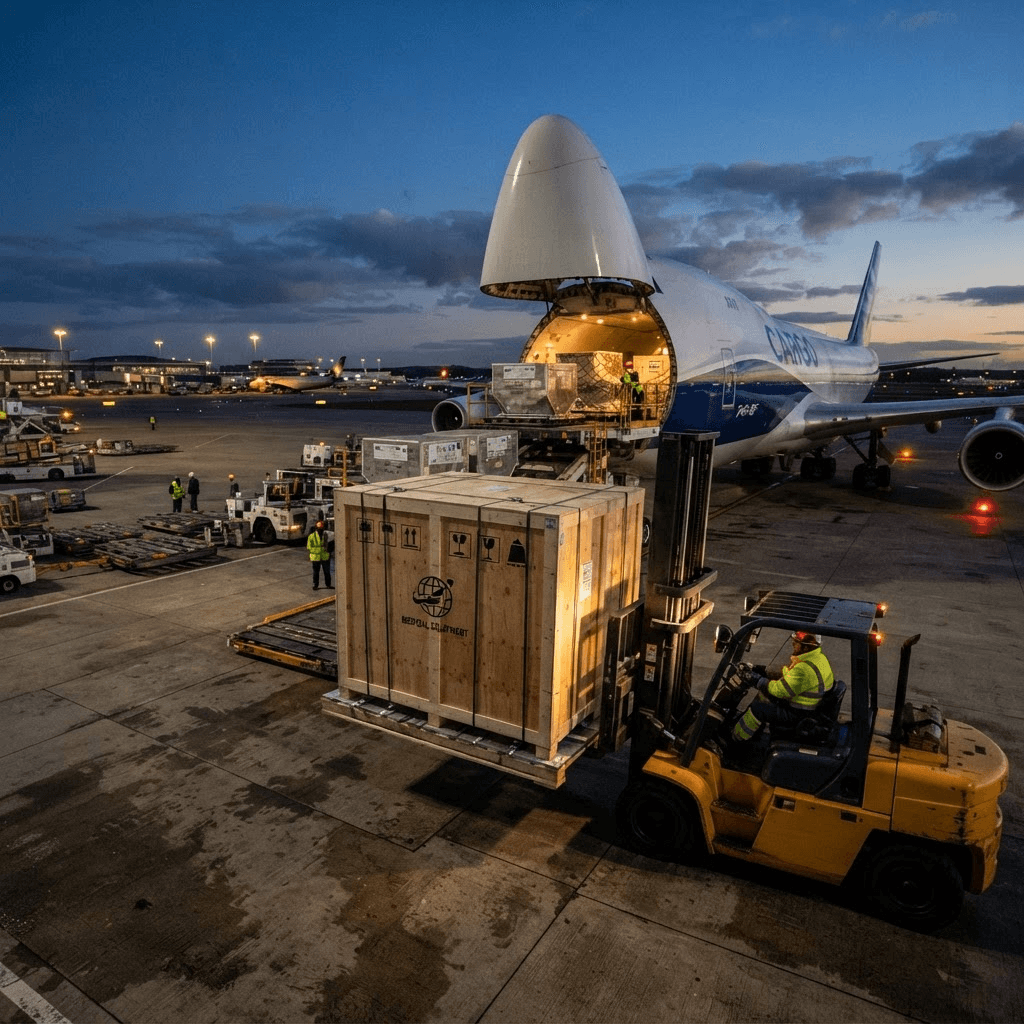
How to Move Medical Equipment in the USA (Fast, Safe and On Schedule)
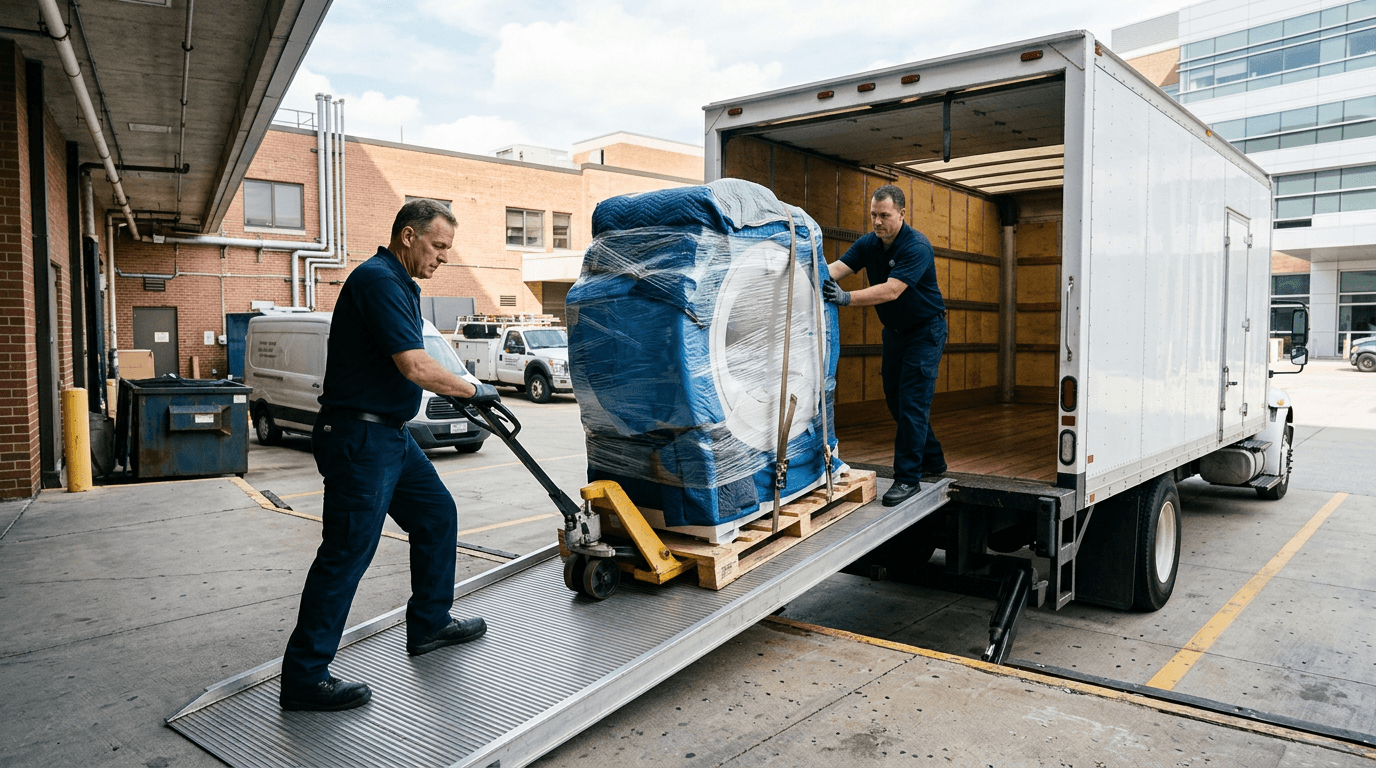
To move medical equipment in the USA, build an equipment list, book the manufacturer for de-installation, prepare and decontaminate each unit, measure both buildings, and ship it on a dedicated air-ride truck with a white-glove crew. When equipment is down and patients are waiting, a hot shot run gets it there the same day.
That is the short answer. The rest of this guide is the step-by-step plan behind it, written for hospitals, imaging centers, labs, surgery centers, clinics and equipment resellers. It works whether you are moving one ultrasound across town or a full imaging suite across the country, and it points out where medical equipment moves usually go wrong so you can avoid those spots.
Need equipment moved now? Call dispatch 24/7 at 866-216-7742 or request a quote.
What is the fastest safe way to move medical equipment?
The fastest safe way is a dedicated truck that carries only your equipment, direct from the pickup dock to the delivery room. No terminals, no cross-docking, and no second crew re-handling the load halfway through the trip. Every time a piece of medical equipment is unloaded and reloaded, it picks up another chance of a cracked screen, a bent arm or a knocked-loose board.
Standard freight (often called LTL, or less-than-truckload) is built for pallets of boxes. Your unit shares the trailer with other freight, moves through one or more terminals, and is delivered to the dock, not the room. That can work for boxed supplies. It is the wrong fit for imaging systems, lab analyzers, surgical equipment and anything a clinician needs back in service quickly.
- Hot shot or STAT: a dedicated vehicle dispatched right away for time-critical medical shipping. Best when equipment is down, a loaner is needed, or a case is on the schedule. See same-day hot shot medical equipment delivery.
- Scheduled dedicated transport: the same direct, one-truck model, planned a few days or weeks out for relocations, upgrades and resales. See medical equipment transport.
- White-glove inside delivery: a trained 2 or 3 person crew brings the unit into the building, to the exact room, unpacks it and takes the debris away.
What information do you need before you get a quote?
Every good medical equipment move starts with a list. It drives the quote, the truck size, the crew size and the insurance, and it saves a lot of back and forth. For each piece of equipment, write down:
- Make, model and serial number
- Dimensions (length, width, height) and weight, crated or uncrated
- Whether it rolls on casters, needs a pallet jack, or needs rigging
- Pickup and delivery ZIP codes, and whether the move is domestic or international
- What the unit needs at the other end: power, data, water, gas or a dedicated circuit
- Photos of the unit, its labels and the path out of the room
- Your requested pickup date and any hard deadline at delivery
Send that list with your quote request and you will get a clearer, faster answer. If you are not sure of a dimension or weight, the manufacturer’s spec sheet usually has it.
Do you need the manufacturer (OEM) to de-install the equipment?
Often, yes. Many systems have warranty or service-contract rules about who can unplug, de-install and re-install them. CT scanners, MRI systems, C-arms, cath lab equipment, lab analyzers and surgical robots commonly need the OEM or a certified biomedical engineer to lock a gantry or stage, ramp down a magnet, or pack delicate assemblies. Moving the unit without them can void coverage you are paying for.
Call the OEM before you book the truck and ask:
- Do you need to de-install and re-install the unit, and how far ahead do we book you?
- Are there shipping locks, brackets or original crates we must use?
- Will moving it affect the warranty or service contract?
- What calibration or testing is required before it goes back into patient use?
A good medical logistics company works around that schedule instead of fighting it. We coordinate pickup and delivery times with your OEM or biomed team so the truck is at the dock when the engineer finishes, not two hours later. For heavier systems, read what to expect from MRI and CT rigging and our playbook on how to move a C-arm safely.
How do you prepare medical equipment for transport?
Preparation is the owner’s side of the job, and it matters as much as the truck. Work through these before pickup day:
- Protect patient data. Back up what you need, then remove or wipe protected health information according to your facility’s HIPAA policy before the unit leaves the building.
- Drain and empty. Drain fluids, empty reservoirs and remove consumables, reagents and gas cylinders.
- Clean and decontaminate. Decontaminate the unit and keep a record that it was done. Crews should not be asked to handle equipment that has not been cleaned.
- Secure moving parts. Install transport locks, lower and lock arms and monitors, and secure doors and drawers.
- Bag and label accessories. Remove cables, probes, keyboards and loose parts. Label each one and pack it separately so nothing is crushed or lost.
- Check batteries. Lithium batteries have shipping rules, especially by air. Ask before you pack them.
- Photograph everything. Take photos of every side of the unit, any existing damage, and the serial label.
Equipment-specific tips are in our guide on how to ship an ultrasound machine. You can also browse the full list of equipment we move.
How do you check the building path at pickup and delivery?
Most delays happen inside the building, not on the highway. A unit that fits through the door it came in may not fit through the new site’s corridor, and an elevator that holds a hospital bed may not hold an imaging table. Walk the route at both ends and measure:
- Every doorway, hallway and tight turn between the dock and the room
- Elevator door size, cab depth and weight capacity
- Stairs, ramps, thresholds and floor load ratings for heavy systems
- Whether there is a loading dock or the job needs a liftgate truck
- Delivery hours, security check-in and any parking or dock reservations
Share the answers, plus a few phone photos of tight spots, with your carrier. That one step prevents most failed deliveries. If you are clearing equipment out of a facility, our hospital equipment removals page explains how we handle inside pickup.
Which type of medical equipment transport do you need?
Match the service to the equipment, the distance and the deadline. Here is how the common options compare:
| Option | Best for | What to know |
|---|---|---|
| Hot shot / STAT | Down equipment, loaners, urgent parts | Dedicated vehicle dispatched right away, direct to the door, same day when distance allows. |
| Dedicated truck | High-value systems, relocations, resales | Your equipment is the only load. No terminal transfers. Air-ride suspension for sensitive electronics. |
| White-glove inside delivery | Anything going to a specific room | Crew brings the unit inside, places it, unpacks it and removes debris. |
| Custom crating | Long distance, fragile parts, export | Built around the unit. Required for most international moves. |
| International air or ocean | Overseas sales, donations, new sites | Export paperwork, ISPM-15 heat-treated wood crates and customs clearance at both ends. |
Sensitive imaging, lab and electronic equipment should ride on air-ride suspension, and electronics, optics and reagents may need climate control. Moving equipment overseas? Our guide to shipping medical equipment internationally covers the steps in detail.
How much does it cost to move medical equipment?
There is no flat price, because no two moves are the same. The cost of medical equipment shipping comes down to a handful of factors you can usually see on your equipment list:
- Distance and route. Local, regional and cross-country runs price differently.
- Size and weight. These decide the truck, the crew size and whether rigging is needed.
- Service level. Hot shot and after-hours runs cost more than a scheduled dedicated move.
- Access. Liftgate, inside delivery, stairs, long carries and tight elevators all add time.
- Packing. Custom crating and export packing add material and labor.
- Fuel. Diesel prices move freight rates. Read how fuel prices affect medical transport rates.
For a fuller breakdown, see what affects medical equipment shipping cost. The fastest way to a real number is a quote with your list and photos.
What insurance and paperwork should a medical move have?
Standard carrier liability is often limited by weight, which can be far below what a medical system is worth. Ask for a certificate of insurance before pickup, declare the real value of the equipment, and confirm the coverage fits it. Do this before the truck arrives, not after something goes wrong.
Then keep the paper trail tight. Use a bill of lading that lists every piece, including accessories. Photograph the equipment at pickup and at delivery. Keep a chain-of-custody record of who handled it and when. If anything looks damaged at delivery, write it on the delivery receipt before you sign.
How far ahead should you plan a medical equipment move?
- Large imaging (CT, MRI, cath lab): start planning 2 to 4 weeks ahead because of OEM scheduling and site prep.
- Lab, surgical and general equipment: about 1 to 2 weeks is usually enough.
- Down equipment and urgent replacements: hot shot or STAT, the same day.
- Full department relocations: plan in phases so patient care keeps running. See planning a hospital department relocation.
What happens at delivery, installation and testing?
Plan the delivery with the receiving team before the truck leaves. Confirm the room, the person signing, and the OEM or biomed appointment for re-installation and calibration. A white-glove crew places the unit, unpacks it and removes packing debris so the room is ready for the engineer.
Equipment should be tested and signed off by the OEM or your biomed team before it is used on patients. If the new location is not ready yet, short-term medical device warehousing keeps the equipment safe until it is.
Medical equipment moving checklist
Print this or download the PDF guide above:
- Equipment list with make, model, serial, dimensions and weight
- OEM contacted and de-install / re-install booked
- Patient data backed up and removed
- Unit drained, decontaminated and secured with transport locks
- Accessories bagged, labeled and packed separately
- Path measured at both ends, dock or liftgate confirmed
- Transport type chosen (hot shot, dedicated, air-ride, climate)
- Certificate of insurance received and declared value confirmed
- Photos, bill of lading and chain of custody ready
- Delivery, install and testing scheduled
Why hospitals and labs call RapidMed Logistics
- 24/7 live dispatch for hospitals, imaging centers, labs and clinics.
- Same-day pickup across VA, MD, DC and NC, plus national and international white-glove delivery. See our Virginia medical equipment shipping page and all service locations.
- Dedicated hot shot vehicles, direct point-to-point, no terminal stops.
- White-glove 2 and 3 person crews, inside delivery and chain-of-custody manifests.
- Installation coordination with your OEM or biomed team, plus medical device logistics for ongoing work.
Get a free quote
Call 866-216-7742 or request a quote at https://www.medicalequipmentlogistics.net/quote . Have ready: pickup and delivery ZIP codes, domestic or international, equipment make and model, dimensions and weight, photos, and your requested pickup date.
Frequently asked questions
- What is the safest way to ship medical equipment?
- A dedicated truck with air-ride suspension, carrying only your equipment from pickup to delivery, with a white-glove crew that brings it inside to the room. Fewer handoffs mean fewer chances for damage.
- Can medical equipment be moved the same day?
- Yes. A hot shot or STAT run sends a dedicated vehicle right away. RapidMed Logistics offers same-day pickup across Virginia, Maryland, Washington DC and North Carolina, and dispatch answers 24/7 at 866-216-7742.
- Who should de-install medical equipment before a move?
- Check with the manufacturer first. Many imaging, lab and surgical systems must be de-installed and re-installed by the OEM or a certified biomedical engineer to protect the warranty or service contract.
- How do I prepare medical equipment for shipping?
- Remove patient data, drain fluids, decontaminate the unit, install transport locks, bag and label accessories, check battery rules and photograph everything before pickup.
- What do I need to get a medical equipment shipping quote?
- Pickup and delivery ZIP codes, domestic or international, the make and model, dimensions and weight, photos, and your requested pickup date. Request a quote at https://www.medicalequipmentlogistics.net/quote or call 866-216-7742.
See more jobs like this on our Facebook page (opens in a new tab)
Need this handled by professionals?
RapidMed Logistics provides 24/7 hot shot, white-glove medical equipment transport with same-day and next-day service. Talk to dispatch or request a quote.