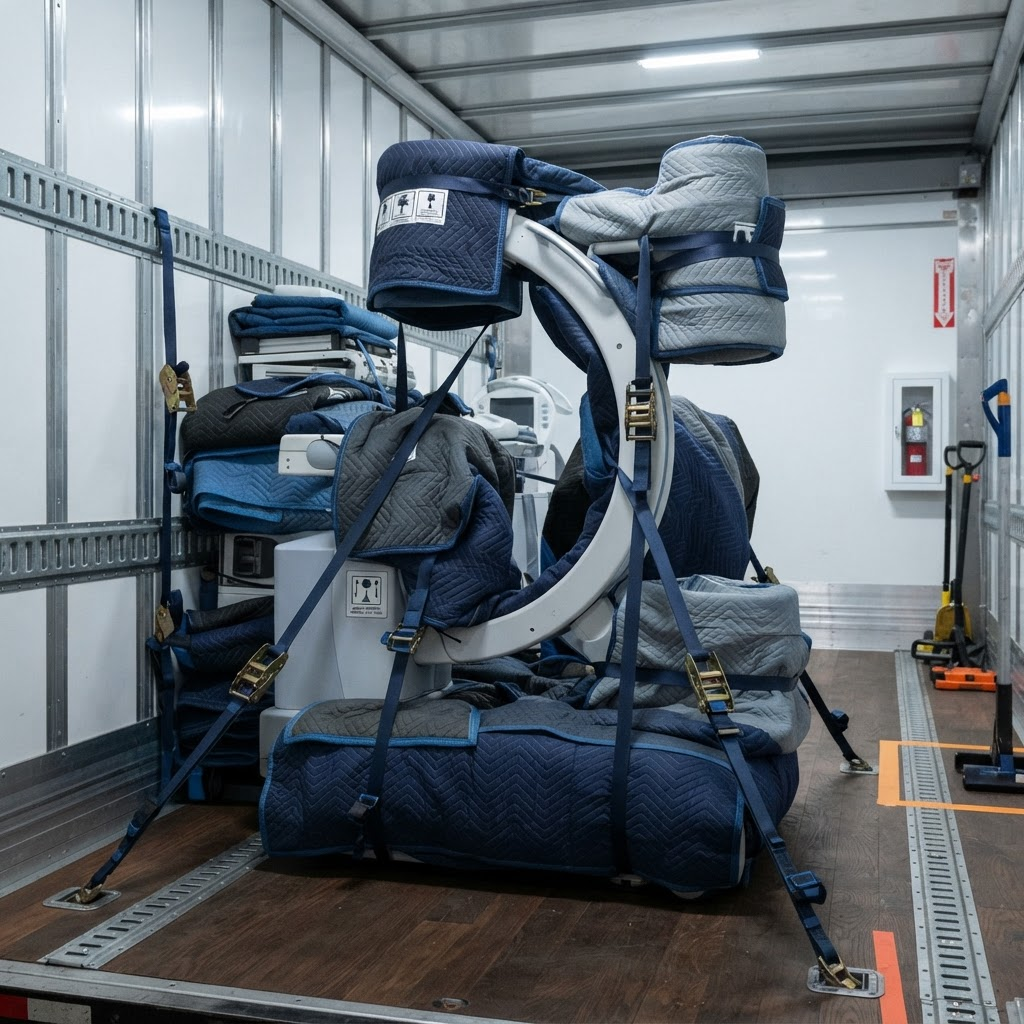
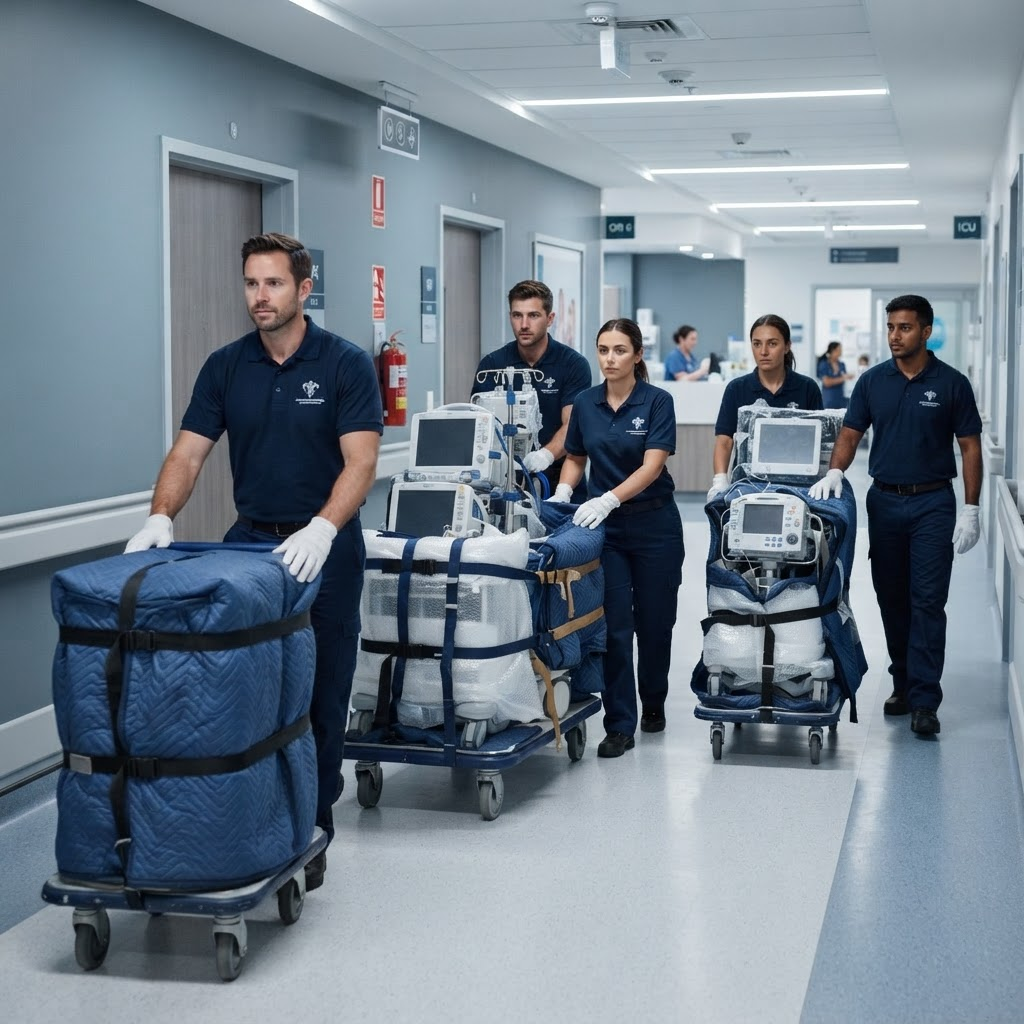
Shipping Medical Equipment Internationally: A Practical Guide
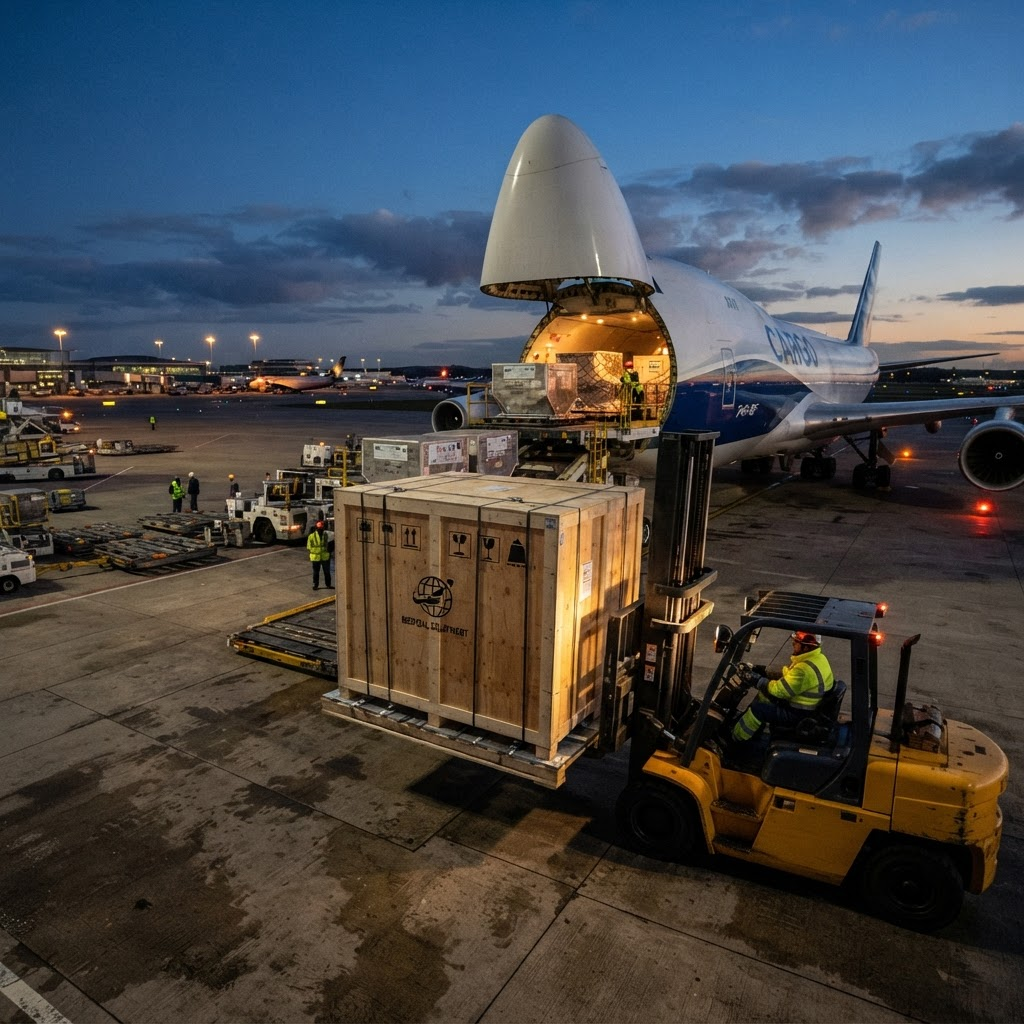
Crating, customs, and carrier selection make or break an international medical shipment. Here is how to get sensitive equipment across borders intact.
Crating is your insurance policy
International transit means more handling, longer transit times, and exposure to humidity and temperature swings. Export-grade crating — with foam bracing, moisture barriers, desiccant, and shock and tilt indicators — is non-negotiable for sensitive medical equipment.
We build crates to ISPM-15 standards for wood packaging so shipments are not held up at the border over treatment compliance.
Air versus ocean freight
Air freight is faster and gentler on schedule-critical or extremely delicate equipment, but it is more expensive and weight-sensitive. Ocean freight is economical for large, heavy, or non-urgent units, at the cost of longer transit and more environmental exposure.
The right choice depends on value, urgency, and fragility — and we help weigh those trade-offs before booking.
Customs, documentation, and door-to-door handoff
Smooth international moves live and die on paperwork: commercial invoices, packing lists, harmonized tariff codes, and any device-specific import permits. Errors here cause the most expensive delays.
We coordinate the full door-to-door chain — origin pickup, export handling, customs, and final white-glove delivery at the destination — so a single team owns the shipment end to end.
Need this handled by professionals?
RapidMed Logistics provides 24/7 hot shot, white-glove medical equipment transport with same-day and next-day service. Talk to dispatch or request a quote.