MRI and CT Rigging: What to Expect on Move Day
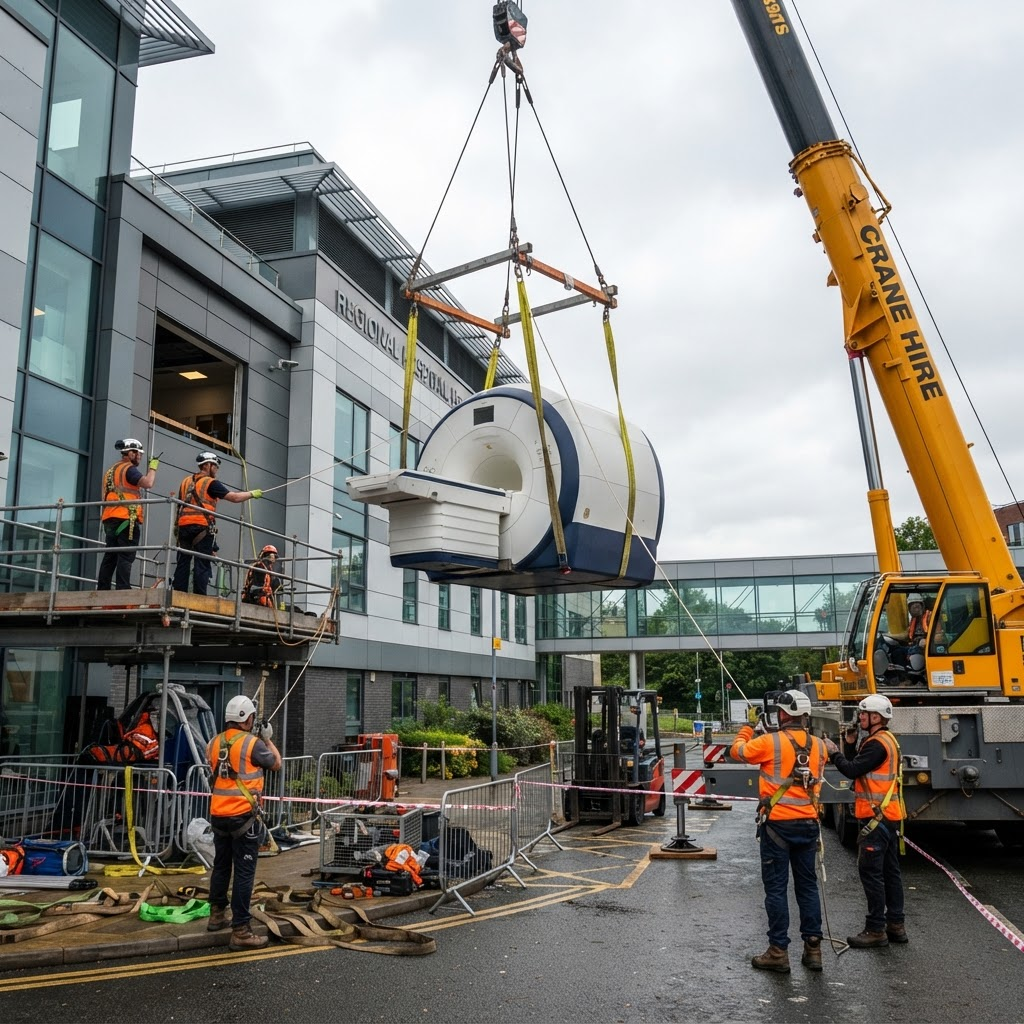
Large imaging systems often require cranes, wall removal, and OEM coordination. Here is what a rigging-heavy move actually involves.
Why imaging moves need riggers, not just movers
An MRI magnet can weigh several tons, and CT gantries are dense, awkward, and unforgiving. These systems frequently cannot fit through existing corridors, which is why rigging — the use of cranes, gantries, skates, and sometimes temporary wall or window removal — is standard.
Rigging is a licensed, engineered discipline. Load paths, floor ratings, and lift plans are calculated in advance so nothing is improvised on move day.
OEM and cryogen coordination
For MRI relocations, the magnet may need to be ramped down and cryogens managed by the OEM before it can travel. We coordinate the transport schedule around the manufacturer’s de-installation and re-installation so the handoffs are seamless.
That coordination is what protects your warranty and your go-live date — the transport and the technical work have to be choreographed together.
The move-day sequence
A typical rigging move starts with site protection, then the lift plan is executed: the unit is skated to the opening, lifted or lowered by crane, and loaded onto an air-ride trailer. At the destination, the sequence runs in reverse into the new suite.
Throughout, spotters, shock monitoring, and a documented chain of custody keep the asset protected and accountable from origin to installed position.
Need this handled by professionals?
RapidMed Logistics provides 24/7 hot shot, white-glove medical equipment transport with same-day and next-day service. Talk to dispatch or request a quote.